
Inspection, service and refurbishment help keep lifting equipment fit for its intended working conditions.
━ MAINTENANCE / LIFECYCLE SUPPORT
A crane is a long-term asset. Planned care and informed repairs matter throughout its service life.
Our maintenance teams support preventive care, repairs, retrofits and re-engineering. The objective is to assess issues and agree practical service or refurbishment work for each crane system.
━ MAINTENANCE / SERVICE PRINCIPLES
Three priorities connecting the discipline to the wider Lemmens engineering process.
01 / PREVENTIVE
Planned maintenance helps identify wear and operating issues earlier.
02 / REPAIR
Component repairs or retrofits can be assessed against equipment condition and site needs.
03 / ADVICE
Re-engineering options are considered where the equipment and requirements permit.
━ MAINTENANCE / SERVICE PATH
A practical service sequence for evaluating maintenance or refurbishment requests.
01
Collect equipment details, operating conditions and reported faults.
02
Review components, working conditions and relevant service records.
03
Carry out agreed maintenance, adjustments or refurbishment work.
04
Document completed checks and discuss follow-up actions.
━ MAINTENANCE / ISO WORKFLOW
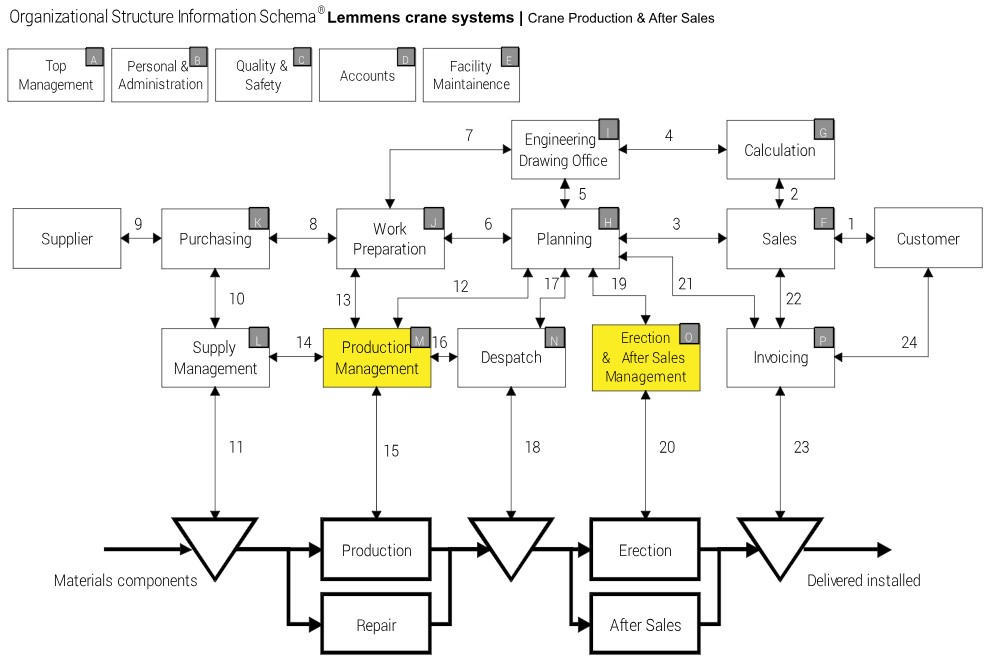
Erection and After-sales Management coordinates installation, maintenance, inspections and repair activities according to approved work plans and safety requirements.
Service engineers assess equipment conditions, document inspection findings and carry out necessary repairs or component replacements. Work vouchers, inspection reports and technical documentation support each service operation.
After completing the required inspections and tests, relevant documentation is prepared and the equipment is returned to the customer in accordance with the agreed service requirements.
Product Management coordinates workshop activities, repairs and component preparation according to approved drawings, work orders and production schedules.
Materials, personnel and equipment are organized to complete maintenance and repair tasks efficiently. Technical changes and repair requirements are documented to maintain quality and traceability.
Each work phase is monitored through inspections and quality checklists. Completed components are verified and released for assembly, installation or return to service.