
Inspection, load testing and technical documentation support the safe operation and handover of crane and hoisting systems.
━ CERTIFICATION / INSPECTION & TESTING
Safety demands more than equipment performance—it requires clear evidence from inspections and tests.
Inspection and testing are supported by defined procedures and technical documentation. We consider project requirements, inspection results and handover records as part of a coordinated verification process.
━ CERTIFICATION / THREE PRINCIPLES
Three priorities connecting the discipline to the wider Lemmens engineering process.
01 / INSPECTION
Review equipment, operating circumstances and applicable inspection requirements.
02 / TESTING
Carry out the agreed checks and testing stages before release.
03 / RECORDS
Capture inspection findings, required records and handover information.
━ CERTIFICATION / VERIFICATION PATH
A structured path from initial requirements to recorded inspection and testing outcomes.
01
Identify relevant inspection needs and supporting project information.
02
Review the assembled or existing lifting system as appropriate.
03
Carry out agreed tests using approved procedures.
04
Prepare inspection reports and required handover records.
━ CERTIFICATION / ISO WORKFLOW
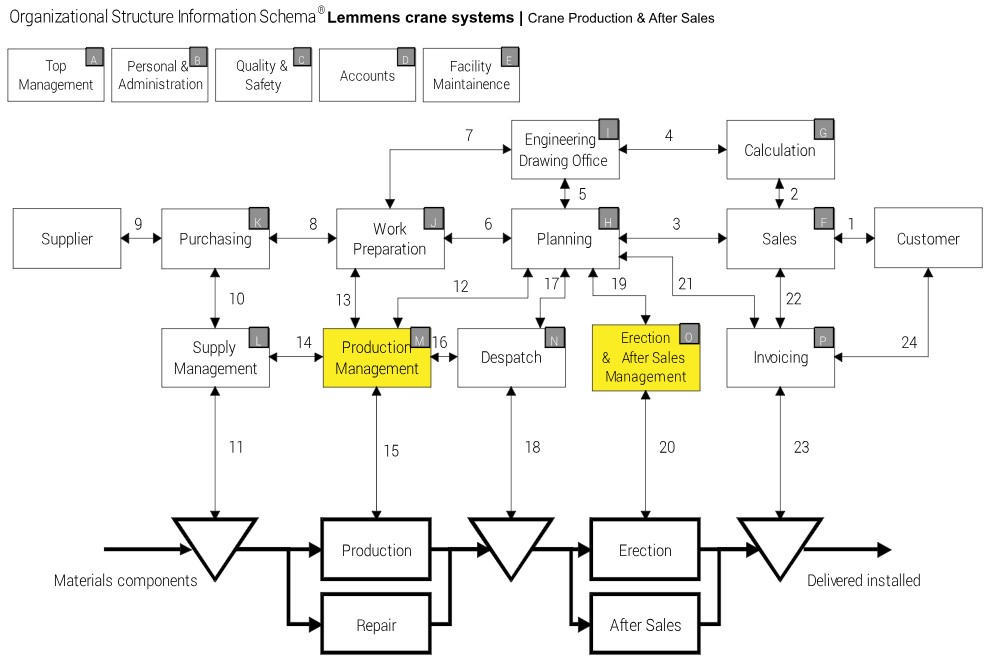
Site preparation, assembly, inspections and handover are coordinated through an agreed work plan. The process includes safety instructions, work vouchers, inspection procedures and final documentation to support the safe installation and certification of crane systems.
Product Management coordinates workshop activities according to production planning, technical drawings and approved work orders. Materials, personnel and equipment are organized to ensure efficient manufacturing and assembly.
Each production phase is monitored through quality checks, documented inspections and progress reports. Technical changes, safety requirements and workshop activities are recorded to maintain traceability and support the final release of components for installation.